
Search Engine Optimisation: A Practical Guide for Businesses
Search engine optimisation (SEO) is the process of improving a website so that it is easier for search engines to understand and more useful to the people who visit it. Done well, SEO can help a business appear in relevant search results, attract potential customers and build a stronger online presence over time.
SEO is not a quick fix or a guarantee of a particular position on Google. Search engines regularly update how they rank pages, and results depend on many factors. A sustainable approach focuses on clear information, a good user experience and content that genuinely meets people’s needs.
How SEO works
Search engines discover web pages, add information about them to an index and then select relevant results when someone searches. Their systems consider many signals, including the content of a page, the links pointing to it, how well it works on mobile devices and whether visitors can use it easily.
SEO helps search engines interpret a website and helps users find the information they are looking for. It generally includes three connected areas: on-page SEO, technical SEO and off-page SEO.
On-page SEO
On-page SEO covers the content and elements found on a web page. Start by understanding what your audience is searching for and what they hope to achieve. Someone searching for “how to choose a bicycle” is likely to want guidance, while someone searching for “buy commuter bicycle” may be ready to compare products.
Useful on-page practices include:
- Creating original, accurate content that answers a clear question or need.
- Using descriptive page titles and headings to explain what each page is about.
- Writing concise meta descriptions that accurately summarise the page.
- Organising content with clear headings and logical sections.
- Adding descriptive alternative text to images where it helps people using assistive technology.
- Linking to related pages on your own website where it is useful to readers.
Keywords can help you understand the language people use, but they should fit naturally into the content. Repeating a phrase excessively can make a page difficult to read and is unlikely to serve visitors well.
Technical SEO
Technical SEO helps search engines access and understand a website. It also supports a smooth experience for visitors. Important checks include making sure pages load reliably, work on mobile devices and use secure connections. A clear site structure, sensible URLs and an up-to-date XML sitemap can also make a site easier to navigate and crawl.
Broken links, duplicate pages and accidental restrictions on search engine access can create problems. Regular technical checks can help identify these issues. For more complex websites, a developer or SEO specialist may be able to investigate them in detail.
Off-page SEO
Off-page SEO refers to activity beyond your own website that can influence how it is perceived. Links from other relevant, reputable websites may help search engines discover your content and understand its context. These links are best earned by publishing useful resources, building genuine relationships and offering something worth referencing.
Avoid schemes that promise large numbers of links quickly. Artificial or manipulative link-building tactics can put a website at risk and rarely provide a reliable foundation for long-term growth.
Measuring progress
SEO results take time, so it is important to track more than rankings alone. Useful measures may include organic visits, the search queries bringing people to your site, enquiries or sales, and how visitors interact with important pages. Tools such as Google Search Console can show how a website performs in Google Search, while analytics tools can help measure activity on the site.
Review performance regularly and use the findings to improve. If a page receives visits but few enquiries, for example, the next step may be to make its information clearer or improve the action visitors are invited to take.
A long-term approach
Effective SEO combines research, useful content, sound technical foundations and ongoing improvement. It works best when it supports wider business goals and provides real value to the audience. By keeping your website accurate, accessible and relevant, you can build a stronger foundation for being found online.
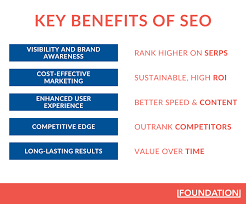
Five Key Advantages of Search Engine Optimisation: Enhancing Visibility, Traffic, Trust, Growth, and User Experience
- Increases visibility in search results.
- Attracts relevant website traffic.
- Builds trust and credibility.
- Supports long-term growth.
- Can improve user experience.
Challenges of Search Engine Optimisation: Understanding the Cons
- Results can take time.
- Rankings are never guaranteed.
- Search algorithms change frequently.
- Competitive keywords can be difficult to rank for.
- SEO requires ongoing effort.
- Poor tactics can damage your website’s visibility.
Increases visibility in search results.
Search engine optimisation can increase your website’s visibility in search results, making it easier for potential customers to find your business when they’re looking for relevant products, services or information. By improving your pages for the terms your audience uses, you can attract more qualified visitors and raise awareness of your brand.
Attracts relevant website traffic.
One of the key benefits of search engine optimisation is its ability to attract relevant website traffic. By creating content around the terms and questions your potential customers are searching for, your website is more likely to appear when they are looking for related products, services or information. This can bring visitors who are already interested in what your business offers, making them more likely to engage, enquire or make a purchase.
Builds trust and credibility.
Search engine optimisation can help build trust and credibility by making a business easier to find when people search for relevant information, products or services. A well-structured website with useful, accurate content and a positive user experience can create a professional first impression and reassure visitors that the business understands their needs. Consistent visibility in organic search results may also help a brand become more familiar to potential customers over time.
Supports long-term growth.
Search engine optimisation can support long-term growth by helping a website attract relevant visitors over time. Unlike some forms of paid advertising, well-optimised pages can continue to appear in search results after the initial work is complete. As a business builds useful content, improves its website and earns trust with its audience, it can strengthen its online visibility and create a steady foundation for future enquiries and sales.
Can improve user experience.
Search engine optimisation can improve user experience by making a website easier to navigate, faster to load and more useful to visitors. Clear page structures, helpful content and mobile-friendly design help people find the information they need with less effort. These improvements can make a site more enjoyable to use while also helping search engines understand its pages.
Results can take time.
One potential drawback of search engine optimisation is that results can take time. It may be several months before improvements to a website lead to noticeable changes in search rankings, traffic or enquiries. This can be challenging for businesses seeking quick returns, so SEO is best viewed as a long-term investment rather than an instant solution.
Rankings are never guaranteed.
Search engine rankings are never guaranteed. Search engines use complex algorithms that change over time, and competitors may also improve their websites and content. Even a well-planned SEO strategy cannot promise a specific position or amount of traffic, so businesses should treat SEO as a long-term investment and monitor results rather than rely on guaranteed rankings.
Search algorithms change frequently.
Search engine algorithms change frequently, which can make SEO results unpredictable. A page that performs well today may lose visibility after an update, so businesses need to keep up with changes, review their website and adjust their strategy. This ongoing work takes time and resources, and rankings can never be guaranteed.
Competitive keywords can be difficult to rank for.
Highly competitive keywords can be difficult to rank for, particularly for newer businesses or websites with limited authority. Established competitors may already have strong content, reputable links and years of search visibility, so reaching the top results can take considerable time and effort. Businesses may need to target more specific search phrases, create genuinely useful content and build their website’s credibility gradually rather than expecting quick results.
SEO requires ongoing effort.
One drawback of search engine optimisation is that it requires ongoing effort. Search trends, competitors and search engine algorithms can change, so content and technical aspects of a website need regular review and improvement. SEO results may also take time to appear, meaning businesses must keep investing in the work without expecting immediate returns.
Poor tactics can damage your website’s visibility.
Using poor SEO tactics, such as keyword stuffing, buying links or publishing thin, duplicated content, can damage your website’s visibility in search results. Search engines may ignore these techniques or apply penalties that reduce your rankings, making it harder for potential customers to find you. Focus instead on useful content, reputable links and a positive experience for visitors.
Leave a Reply